Introduction
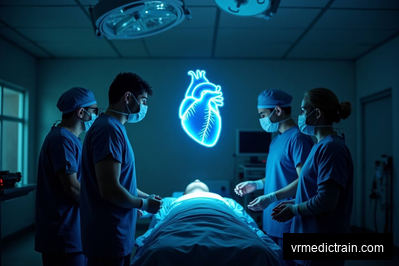
The world of medical education is in a constant state of evolution, with technologies such as Virtual Reality (VR) acting as catalysts for transformative change. Particularly in the realm of surgical training, VR simulations offer an innovative approach, bridging the gap between theoretical learning and practical application.
This paradigm shift is not merely a technological advancement but a pedagogical revolution, drastically altering the way surgeons are trained. The immersive nature of VR simulations enables trainees to practice intricate procedures in a realistic, risk-free environment, thereby enhancing their learning experience and improving patient outcomes.
Building upon the foundation laid in the introduction, it is crucial to delve deeper into the transformative impact of Virtual Reality (VR) in medical education. Imagine medical students immersing themselves in a virtual surgery room, practicing complex procedures in a risk-free environment. This innovative approach not only enhances practical skills but also fosters quick decision-making abilities under pressure. Furthermore, the integration of Artificial Intelligence (AI) in medical education is revolutionizing the way students learn and interact with vast amounts of data. By exploring these cutting-edge technologies, the potential for enhancing medical training reaches new heights.
The Emergence of VR in Surgical Training
The advent of VR in surgical training has its roots in the early nineties, with the development of the first laparoscopic VR simulator by Immersion Medical. Since then, VR technology has continued to evolve, with major companies like Osso VR and Fundamental VR leading the charge.
These companies employ VR to create hyper-realistic simulations that mimic real surgical scenarios, allowing trainees to practice complex procedures without risk. For instance, Osso VR's platform enabled orthopedic surgical residents to improve their performance by 230% in a randomized blinded study conducted by the David Geffen School of Medicine at UCLA.
As VR technology continues to advance, its applications in surgical training have become increasingly sophisticated and impactful. Surgeons are now able to practice intricate procedures in a virtual environment that closely mimics real-life scenarios, enhancing their skills and decision-making abilities. For instance, simulators like Osso VR allow medical professionals to perform virtual surgeries using actual tools and equipment, providing a realistic and immersive training experience. This innovative approach not only improves the technical proficiency of surgeons but also boosts their confidence and readiness for complex operations.
Practical Implications of VR Simulations
With the application of VR in surgical training, the traditional model of 'see one, do one, teach one' is being challenged. VR offers a safe, controlled environment where surgeons can repeatedly practice procedures, gaining proficiency and confidence before operating on real patients.
For instance, a study in the Journal of Surgical Education demonstrated that surgical residents trained using VR simulation performed gallbladder dissection 29% faster than those trained conventionally. Furthermore, the VR trained residents made six times fewer operative errors, showcasing the tangible benefits of this technology.
In addition to revolutionizing surgical training, VR simulations are making significant strides in enhancing disaster preparedness. Emergency responders now have the opportunity to train in hyper-realistic virtual environments, preparing them for various crisis scenarios such as natural disasters or terrorist attacks. By immersing professionals in these simulations, critical decision-making skills can be honed in a safe yet realistic setting. This not only improves response times and coordination during emergencies but also minimizes the risks associated with on-the-job training.
Challenges and Limitations
While VR-based surgical training holds immense potential, it is not without challenges. The high cost of VR equipment and the need for technical expertise can act as barriers to widespread adoption. Furthermore, while VR can simulate visual and auditory cues, it still falls short in replicating the tactile feedback experienced during actual surgery.
Another limitation is the potential for VR-induced symptoms such as motion sickness or cybersickness, which can cause discomfort to users. However, advances in technology and an increasing focus on user experience are likely to mitigate these issues over time.
One notable challenge in VR-based surgical training is the need for specialized equipment, such as high-end VR headsets and haptic devices. The cost associated with acquiring and maintaining these tools can be a significant barrier for many medical institutions, limiting the widespread adoption of this technology. Additionally, ensuring the accuracy and realism of virtual simulations poses another limitation. While VR can provide immersive experiences, replicating the complexities of real-life surgical scenarios with complete fidelity remains a challenge, affecting the effectiveness of training programs.
The Future of VR in Surgical Training
Despite these challenges, the future of VR in surgical training looks promising. With the advent of more affordable and user-friendly VR hardware, such as the Oculus Quest, and advancements in haptic technology, the accessibility and realism of VR simulations are set to improve.
Furthermore, integrating AI with VR could enable personalized learning experiences, adapting to the individual's skill level and learning style. For example, a system could identify weaknesses in a trainee's technique and provide targeted feedback, enhancing the overall learning process.
Further advancements in VR technology are revolutionizing surgical training by offering realistic simulations that mimic actual surgical procedures. These simulations allow medical students and aspiring surgeons to practice intricate techniques in a safe and controlled environment, enhancing their skills and confidence before entering the operating room. For instance, platforms like Osso VR and Fundamental VR are paving the way for immersive training experiences that closely resemble real-life surgeries, providing invaluable hands-on practice without risking patient safety. As VR continues to evolve, it is poised to become an indispensable tool in shaping the future of surgical education and improving patient outcomes.
Conclusion
The integration of VR in surgical training signifies a revolutionary stride in medical education. By providing a risk-free environment for practice, VR simulations can enhance learning, boost confidence, and ultimately improve patient outcomes. With continuous advancements in technology, the scope and effectiveness of VR in surgical training are set to reach new heights.
The future of surgical training lies not merely in mastering the human anatomy or honing manual dexterity, but in harnessing the power of technology to create immersive, realistic, and adaptable learning experiences. As we stand on the precipice of this exciting new era, it is clear that VR has a significant role to play in shaping the surgeons of tomorrow.
In conclusion, the remarkable advancements in VR technology have not only transformed surgical training but also opened up new possibilities for enhancing patient care and outcomes. With the ability to simulate complex surgical procedures in a realistic virtual environment, medical professionals can now refine their skills and techniques with greater precision and confidence. This innovative approach not only reduces the risks associated with traditional training methods but also allows for continuous improvement and adaptation to evolving medical practices. As VR continues to revolutionize the field of healthcare education, the future holds immense potential for further advancements in surgical training and patient care.